
The Quarter is for Sales, The Decade is for the Brand
Author: Yuvraj Patil
Theme: “Forever Trusted: The Human Side of Eternal Brand Building”
As I sit down to pen this, looking at the calendar for 2026, the significance of January 3rd weighs heavily. It is not just a date to remember the legends Prof. Chitta Mitra and Prof. Tarun Gupta but a date to audit our own consciences.
As a Marketing Head, reality is often governed by two clocks that tick at very different speeds.
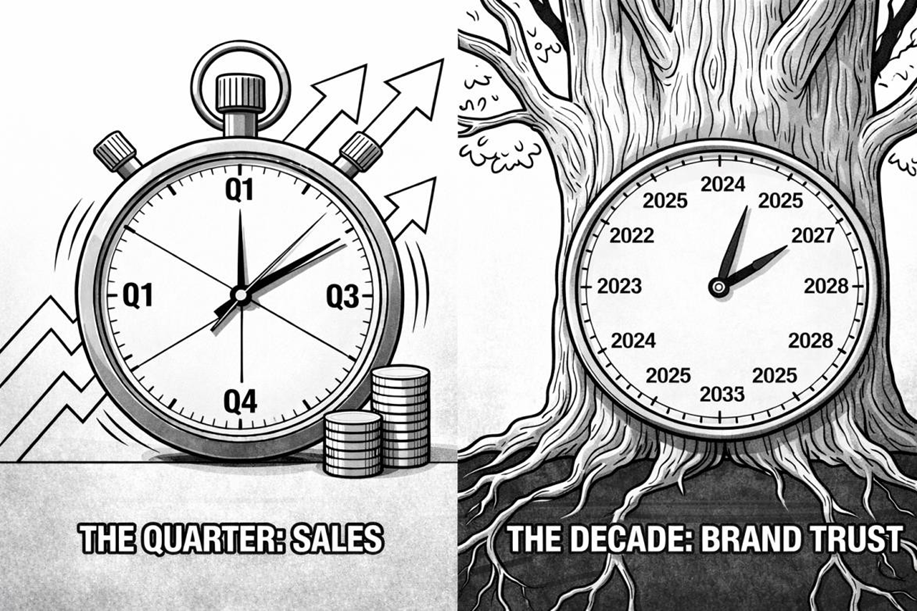
The first clock is loud and urgent. It ticks in months and quarters. It screams about closing figures, P&L statements, competitor activities, and market share. It demands that we push, convert, and close.
The second clock is silent. It ticks in decades. This is the clock of Brand Equity. It measures the “Human Side” of our business—the trust a physician places in us when they write a prescription for a chronic patient, knowing that the patient’s life depends on that molecule for the next twenty years.
The theme for this 10th World Pharma Brand Managers Day, “Forever Trusted,” is not just a marketing tagline. For those of us leading marketing divisions, it is a strategic checkpoint. If we
let the noise of the first clock drown out the silence of the second, we might make our numbers for 2026, but we risk having no business in 2036.
Here is a humble perspective on the struggle to build “Eternal Brands” in a world obsessed with short-term wins.
The Strategic Courage to Say “No”
Perhaps the hardest part of this job isn’t saying “yes” to a great campaign; it is saying “no” to a
profitable shortcut.
In the heat of a fierce market battle, the temptation to compromise is real. To overpromise on a claim. To use a tactical gimmick that spikes sales but dilutes the brand’s dignity. To treat the doctor as a transaction rather than a partner.
Prof. Chitta Mitra taught the industry that a brand is not a factory product; it is a psychological contract. When that contract is violated for a temporary gain, something is broken that takes years to rebuild. “Good Branding & Marketing Practices (GB&MP)” are not just ethical guidelines; they are risk management strategies.
As marketing leaders, the task is to find the courage to say: “We will not take that shortcut. We may miss the target this month if we must, but we will not compromise the trust this brand holds.” That is the burden of the role. Trust is often preserved in the moments where we refuse to sell out.
The “Human Side” is Data We Can’t Capture
We live in the era of Big Data. Dashboards are full of analytics prescriptions per capita, growth percentages, ROI. But it is worth remembering that the most important data point in our industry is invisible to the algorithm.
It is the look of relief on a patient’s face when therapy works. It is the confidence in a doctor’s
hand when they prescribe a brand without a second thought.
We often mistake “Brand Building” for “Exposure.” We think if we shout louder, we build a bigger brand. But “Eternal Brand Building” is about intimacy, not noise. It is about understanding the human struggle behind the disease.
When we market a diabetes drug, are we just selling glycemic control? Or are we selling the
father’s ability to walk his daughter down the aisle without fatigue? When we market a cardiac drug, are we selling vasodilation? Or are we selling a grandmother’s extra five years with her grandchildren?
The “Human Side” demands that we stop marketing to “Target Audiences” and start communicating with “People.” As Marketing Heads, the goal is to ensure our teams understand
that brands enter people’s homes, their bloodstreams, and their lives. We are guests in their bodies. We must behave with the respect that such a privilege demands.
Nurturing the Next Generation of Guardians
The invitation for this essay mentioned a crucial goal: “to nurture the younger generation to become the industry leaders of tomorrow”.
This is a responsibility shared by all of us in leadership. The contribution we make is not just the market share we capture, but the values we pass on.
There are many young Brand Managers today who are brilliant at digital marketing, artificial intelligence, and data crunching. They are sharper and faster than previous generations. But the role of leadership is to anchor that speed with perspective. We must remind them that while tools change, human nature does not. The anxiety of a patient remains the same. The burden of a doctor remains the same.
If we drive teams only for numbers, we risk raising a generation of mercenaries. But if we teach that the primary P&L is “Profit & Lives,” we help raise a generation of Brand Guardians. We need to demonstrate that “Forever Trusted” is an active verb. You have to earn “Forever” every single day.
The Road Ahead: 2026 and Beyond
As we celebrate the 10th World Pharma Brand Managers Day, we stand at a crossroads. The industry is becoming more complex. Biology is merging with technology.
But the core truth remains the wisdom handed down by stalwarts like Prof. Tarun Gupta: The brand exists in the mind of the customer, not on the shelf of the pharmacy.
To fellow leaders and the emerging C-suite executives: Let us make a pact. Let us use our positions not just to drive revenue, but to drive distinctiveness through integrity. Let us build brands that don’t just survive the patent cliff but survive the test of character.
Let us commit to the “Human Side.” Because in the end, pills are small, fragile things. It is Trust that is the medicine.